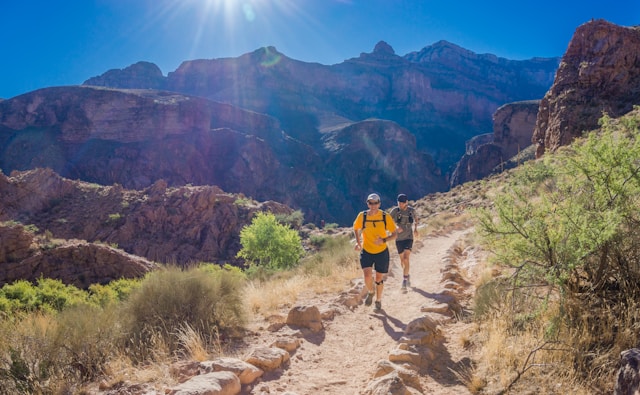
running trails
A trail runner makes his way up a precipitous climb. With thanks to Forrest Boughner
You could be better suited to trail running if you’ve ever forced yourself to go for a run on crowded tarmac or suburban sidewalks and detested every harsh, merciless stride. As a popular outdoor sport, trail running has gained popularity and developed its own lexicon, gear businesses, and influencers. Fundamentally, though, it’s just jogging on trails as opposed to roadways.
Before I started running on trails, I was not a runner. I used to feel like throwing up when I thought of running, but eventually I traded in my weekend hike for a trail run. Running uphill is really challenging if you’ve never done it before, as I soon found out. However, the moment I pivoted on the crest and began sprinting back downhill, leaping over stones and tree roots, I became enthralled. I had never experienced this kind of high before. It was not nearly as much fun running a few boring miles around my neighborhood.
Run on trails to get deeper into the forest more quickly.
I finished an 18.6-mile race with an elevation climb of over 3,000 feet this spring. The bug bites severely when it does. The way trail running gets you ready for your other Type-II hobbies is one of its best features. For example, only people who do both hunting and trail running can truly understand the connection between the two. The trail runner takes over whether you’re sprinting to catch an elk or hauling ass uphill in the direction of a gobble. You suddenly find yourself eating that climb like it was breakfast after all of your breathing, mechanics, and mental preparation changed.
To enjoy trail running, or at least to get its benefits, you don’t need to be a fan of jogging. Everything you need to know to start trail running is as follows:
The worst thing for a newbie trail runner to do, as with most new pastimes, is to stroll into your local sports goods store and get lost in the maze of trail running equipment. You may talk yourself into dropping hundreds of dollars on the newest gaiters, hydration packs, vests, clothing, shoes, and GPS watches, to name just a few items. That’s excessive, though.
You probably already have an athletic pair of sneakers; that’s basically all you need. You can use these for road running or even just for working out (just avoid using those extremely hard, flat crossfit shoes). For your first outing, lace them up and locate a park with a low elevation or a dirt or gravel road, or anything similar. After you become addicted, you can consider getting shoes with more traction for paths with more treacherous terrain. A few things to remember are:
Move slowly. Maintain a relaxed tempo.
Don’t be scared to hike if there is a substantial incline instead.
Take pleasure in jogging the level and descending areas.
Raise your arms in combat. Pump them to increase your momentum and maintain a slightly greater distance from your body than you would on a typical run.
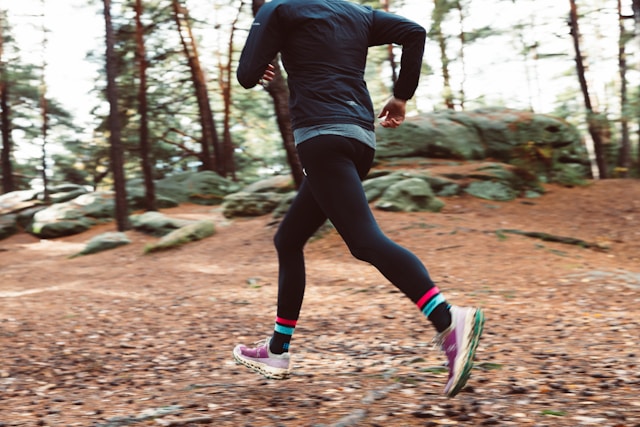
Technique for Trail Running
Like other sports, trail running demands a special kind of mindset in addition to paying close attention to form and body mechanics. Physical therapist and accomplished trail runner Sara Boughner, who recently won the women’s category in the Wasatch Front 100 Mile Endurance Run, suggests embracing the unpredictable aspect of trail running.
Let go of certain expectations you might have if you’re used to running on the road when trail running. “This kind of running is more of an experience. Rather than setting a pace and maintaining it for every mile, you’re interacting with the terrain and modifying your body’s actions in response to the route ahead of you.
Running at a Trail Pace
The most common error made by inexperienced trail runners, particularly those who are accustomed to road running, is to run too quickly and tire out within the first ten minutes of the run. You will run trails slower than you will run roads, there is no getting around it. A portion of this can be attributed to the variations in your steps. Some will have puddles, tree roots, or pebbles in them. Some people will experience inconsistencies. Consequently, each step demands concentration and effort.
According to Boughner, “you have to start basing success more on your effort level and throw out the idea of pace.” Before beginning trail running, everyone I know who ran roads had to go through a learning curve or process to realize that, yes, an 18-minute mile up that hill might be the quickest anyone has ever gotten up that hill. You must totally modify your expectations and level of involvement in running.
When you initially start out, plan on running 11-minute miles or slower if you typically run 9 to 10 minutes each mile. Your upward speed may be more like fifteen or twenty minutes. According to Boughner, there are certain steep sections where hiking may even be more effective than running. However, wasting time worrying about your pace is a waste of time. Especially for the novice, the goal of trail running is to take your time.
Where to Look
You don’t look at your phone or walk straight ahead as you would on a sidewalk while you’re on a trail. To ensure that you don’t trip, you must at least partially pay attention to the ground in front of you. The process is the same for trail running, but you’re making those split second decisions about where to put your feet even more quickly. It is therefore marginally more cognitively demanding than road running.
Even though it can be tempting to fix your gaze on your feet, force yourself to glance a little bit forward. Generally speaking, whether you’re jogging a level portion, heading uphill, or downhill, you should be looking 10 to 15 feet ahead of you.
Boughner states that planning your route and not only relying on what’s immediately in front of you can be achieved by looking ahead. “You’ll move through the terrain more quickly if you can arrange your line of steps before you get there.”
It’s also critical to regularly assess your environment. Avoid becoming so engrossed on the path that you lose all awareness of what’s going on around you.
We all prefer to “get into the zone,” Boughner says, “looking at the ground and not seeing that there’s a biker right up ahead.” “Look up and around from time to time.”
Simply hike if you begin to feel overwhelmed or if the trail becomes really hazardous or rocky. You’ll learn to appreciate the scenery as you hone your trail running skills. Getting to run somewhere gorgeous and wild is half the fun. If you spend the entire time gazing at your shoes, you risk missing it.
jogging both downward and upward
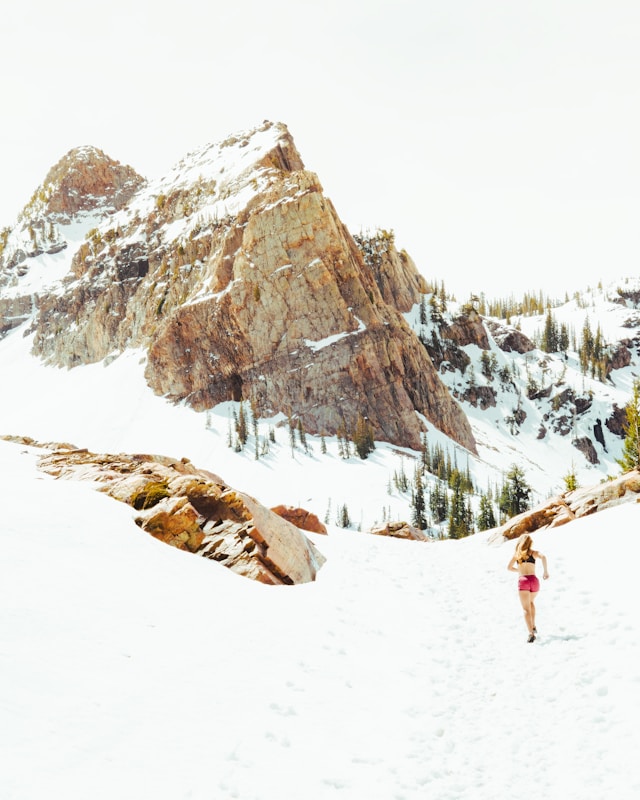
To maximize every stride when you begin to incorporate elevation into your trail runs, there are a few specific methods to keep in mind. When sprinting uphill, you ought to:
Steer clear of touching the ground with your heels.
Do not bend at the waist when you slant forward just a little at the ankles.
To clear your airway, keep your chin up.
Focus your attention on the ground in front of you.
Lift your knees as though you were ascending steps.
On long climbs, however, aim to plan ahead in addition to maintaining proper form.
“The ability to read the terrain and the trail is crucial. You will need to change your pace if your run consists of a 3-mile climb with 2,000 feet of elevation gain vs a single, 100-foot hill with flat terrain the rest of the way, according to Boughner. It’s crucial to know what to anticipate so you can adjust how hard you work. Does this have to be a sustainable speed for the duration of the climb, or may I go at a comparatively less sustainable pace that will end sooner and allow me to recover more quickly?”
Your running form will be slightly different when jogging downhill. Ensure that you:
Refrain from reclining since it puts undue strain on your quadriceps.
If not slightly forward, at least maintain a perpendicular position with respect to the ground beneath you.
To prevent tripping, take quick, light steps and raise your feet. Use your arms for balance. You’ll need to go more quickly and with shorter steps to negotiate more difficult terrain, such as a scree field or an extremely rocky track.
What to Wear for Trail Running Outfits
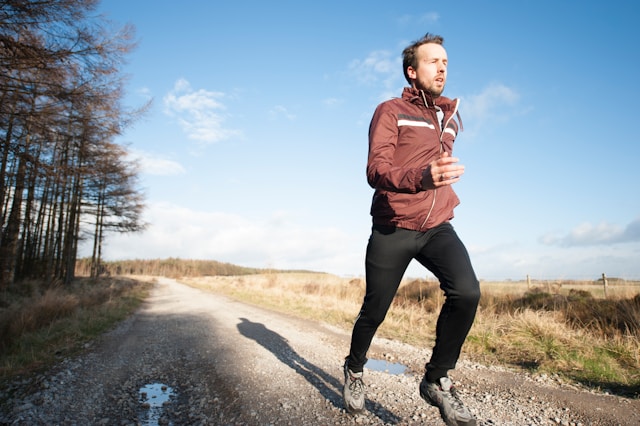
trail runners wearing clothing for running trails
Make careful to wear proper clothing if you plan to gain elevation or be exposed to the weather in any other way.
After a few trial runs, if you decide trail running is for you, it might be time to get some appropriate equipment.
The primary factor in choosing the appropriate trail running clothing is the weather. It’s likely that you already know how to dress for outdoor activities: moisture-wicking materials for hot weather, warm base layers for chilly days, and all the standard outdoor clothing guidelines (never wear cotton). It’s always a good idea to have more pockets, especially if they zip and can accommodate items like phone, ID, car keys, and munchies.
Additionally, quality socks are essential. Many runners favor contemporary merino wool socks made for running or hiking. Wool is often softer and more supporting than cotton, and it breathes well, allowing moisture to escape readily. Since you’re more likely to trip over rocks or roots on the path, the cushioning that running socks give is very crucial. Reliable trail running shoes are also essential (more on those in a moment).
Purchasing a jogging vest or hip belt is a smart move in addition to clothing. This is especially true in bear country (Osprey and Camelbak are also solid options; I personally prefer Nathan vests). Bear spray is vital if you think you might run into a grizzly or possibly a mountain lion; the only practical method to carry it is on a running vest or hip belt. Because trail runners make less noise than hikers and cover ground more quickly, they are more likely to encounter unexpected wildlife. In black bear country, most trail runners feel that using bear spray is excessive.
What You Need for Trail Running Gear
a pathway that runs beside a gravel road. Running in predator country requires having bear spray handy.
When going on a trail run, think about toting:
- Water
- Snacks: little granola bars, energy gels or chews, or a classic PB&J
- Electrolyte mix: some without sugar, some with caffeine, and some without flavor
- Your phone, a GPS watch, or a GPS device
- a waterproof layer or an additional layer
- Sport sunglasses and a hat that breathes
- Satellite-based messenger
Water is especially crucial if you’re going to be gone for more than an hour or if you’re running in hot or muggy circumstances. A few of the top-notch hydration bladders are reasonably priced. You may even be hiking or hunting with one already. Although they are typically offered together, most 1.5-liter bladders can fit in most running vests, so you don’t need to buy the two at the same time. Before making any purchases, make sure the used running vest and your bladder are compatible if you already own one.
The goal is to not overpack so much that you feel overly burdened, but just enough food, drink, and gear to get you through the run safely and at least moderately comfortably. Put off the more involved trips and the difficult terrain until another day. Continue strengthening your heart and learning what fits comfortably within your running vest while you wait.
How to Choose the Best Shoes for Trail Running
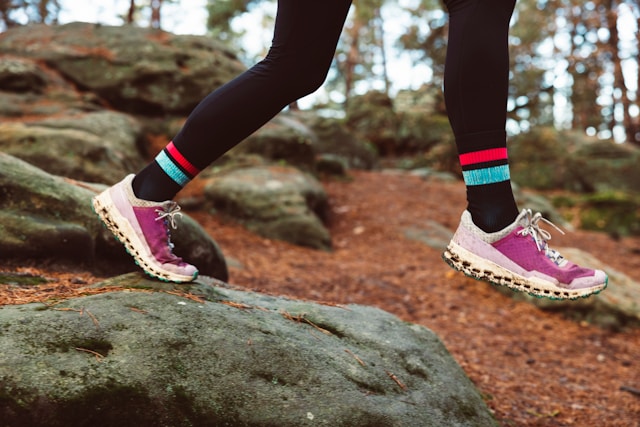
Also, you’ll need a decent pair of sneakers. Similar to hiking boots and road running shoes, trail running shoes are offered in an assortment of sizes and designs. Apply the same reasoning to your trail running shoes if you’re an experienced road runner with preferences for road shoes.
See a local specialty running store for a fitting if you’re new to running and don’t know what kind of shoes to buy. Choosing the right shoe for your foot type, running style, distance, and intended terrain can be aided by an expert.
shoes for trail running
How Do Zero-Drop Shoes Work?
You may find that you prefer shoes with less padding so you can feel more of the ground underfoot after trying on a few different pairs. If so, you might want to consider trying a pair of trail running shoes with zero drop, such as the Altra Lone Peaks (available in both men’s and women’s sizes). When you say “zero-drop,” you indicate that your heel and toe are at the same height above the floor as they are when you’re barefoot. Additionally, most zero-drop shoes have very little cushioning. Because of this, wearing these shoes makes your calves, ankles, and Achilles tendons work harder. The stabilizing and propulsion work that more supporting, cushioned, and stable shoes would typically help with is being done by those muscles. But what you end up with is a running sensation that is most like going barefoot. After all, this is how humans evolved, according to study.
Wearing zero-drop shoes won’t make you less prone to injuries, though. However, once the first calf pain subsides, you may be surprised at how agile and light-footed you feel while hiking. You’ll be appreciative of your strong feet and rock-hard calves when it comes time to load an elk out of a ravine.
If you don’t like the fit or feel of the shoes after a few runs, you can return or exchange them according to the generous return policies offered by many shoe brands. The ideal trail running shoes for you will ultimately rely on your stride, foot type, and personal preferences.
Advice on Nutrition, Hydration, and Injury Prevention
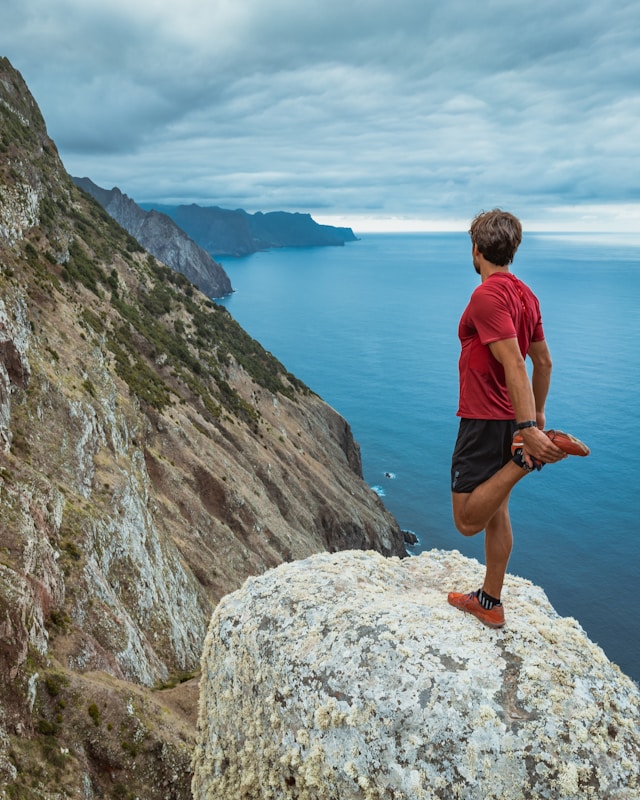
Your ability to tolerate longer distances, rough terrain, and elevation gain will increase with the amount of trail running you do.
There are several ways to discover more of a challenge if the trail running bug has bitten you. Take into consideration registering with RunSignUp or the American Trail Running Association for a local trail race. Look for local running groups on Facebook. It’s likely that any specialty running store in your area will connect you with other trail runners through classes, group runs, and other resources.
As a trail runner, pushing your limitations on distance is also enjoyable. In the worst case scenario, your Saturday morning run can become a mile jog plus a 4-mile hike—and still be equally beautiful and enjoyable—if your legs and lungs give out.
Injury Prevention in Trail Running
Running on trails has its own set of potential injuries. Trail runners are therefore neither more or less prone to injuries than road runners. An injury on the path could be a strain, sprain, fracture, or total break of a bone due to an awkward step or tumble. The first step in preventing injuries is to get your muscles ready for the amount of work that a trail run requires. Injury risk increases rapidly when poor form results from muscle exhaustion.
Trail Running: Cross-Training
According to Boughner, there are a few particular muscle groups that are particularly crucial for trail running.
There is no one-size-fits-all solution; it depends on the individual’s past injury history. But generally, work on building up your glutes, calves, and especially your soleus. These are the top three, according to her. “While everyone needs strong hamstrings and cores, those are the muscle groups I’d concentrate on if I were just starting out, had little time, and your injury history supported it.”
Plyometrics, split squats, calf raises, and box step-ups are all excellent exercises. To get the most out of strength training, mix it in once or twice a week. Boughner suggests avoiding strength training the day or two before a long run.
Taking Care of Your Nutrition for Trail Running
trail runner cuisine
Taking good care of your body before, during, and after runs is one of the best ways to be a safe trail runner. Depending on how far you are from the trailhead and how deep into the forest you are, weariness, muscle cramps, and thirst could become serious issues.
A day or two before your longer runs, carb up, advises Boughner. By doing this, you can make sure you have enough energy reserves to get through the entire task. Brown rice, quinoa, and oats, along with fruits, legumes, and certain vegetables, are some of the best, highest-carb foods.
One of the first systems to practically shut down from lack of blood supply during a run is the digestive system. Boughner advises having a carb-rich meal during the first 20 minutes of a longer run to prevent these problems (which is why nausea, vomiting, and diarrhea are common ailments for long-distance runners). That may be a gel, some chews, or an energy bar. Continue eating as you run. You can maintain the healthy operation of your digestive system by feeding it food. To keep up a specific level of performance when running, you must also consume calories. You will require more calories to run a longer trail. Although this varies for each person depending on their body weight and energy production, as a general rule of thumb, you should ingest approximately 100 calories for every 30 minutes of jogging.
Food is also essential to the healing process after a run, according to Boughner. After completing a lengthy run, consume a high-protein meal within 15 to 30 minutes. This might be a peanut butter sandwich, a protein bar, or some nuts and cheese. In order to replenish lost calories and nutrients, attempt to eat a complete meal within the next hour.
Drinking Water While Trail Running
Naturally, staying hydrated is also essential. To stay hydrated, you should drink 24 to 32 ounces of water for every hour that you spend running on trails. This is only a pretty broad generalization, though.Up your water consumption if you anticipate perspiring a lot on a very hot day. That electrolyte mixture should ideally contain salt as well as other vital nutrients to replace all the nutrients you lose perspiration. There are various methods that trail runners choose to carry water, so figure out what works best for you. This covers hydration bladders carried in jogging vests, hip belts with attached water bottles, and hand-held water bottles. However, there is such a thing as overhydration, so when running, use liquids sparingly.
Trail Safety and Manners
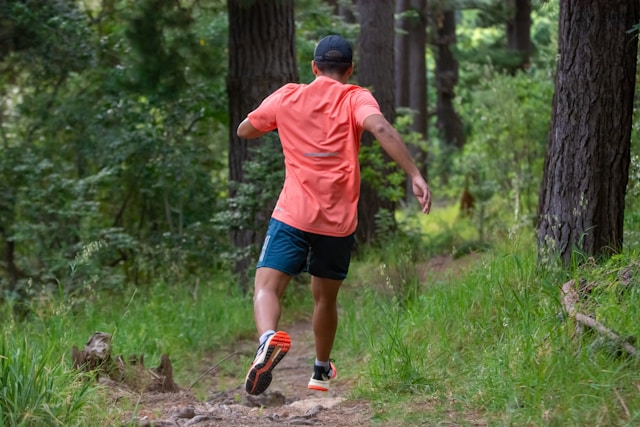
Being a safe trail runner includes not just packing the necessities but also knowing trail etiquette, interacting with other trail users, and doing your homework before heading out. As the creator of Alpine Running Guides and a seasoned trail runner, Forrest Boughner is married to Sara Boughner. He is accustomed to researching trail conditions before leading guided parties.
Forrest explains, “One of the biggest differences between road running and trail running is that if something goes wrong, you are quickly beyond immediate help.” It can take hours for someone to come help you if you break your leg. Therefore, one of the most important aspects of being a good trail user is knowing where you’re going and what the repercussions are. Go exploring, but keep in mind that going off track has a higher danger.
Common Trail Protocol
trail running protocol
The likelihood is that you won’t be the only person on the trail because of the recent surge in popularity of outdoor activities. You may come across motorcyclists, horseback riders, serious hikers, casual walkers, mountain bikers, and other runners. You will move more slowly than some of these people and more quickly than others.
Make sure to let hikers and walkers know you’re approaching while you’re at least 20 feet behind them. To create some natural noise, Forrest suggests kicking a few rocks or scuffing your shoe. Then, he suggests softly saying, “Coming up behind you!He claims that doing so is only polite behavior and will prevent you from frightening them.
Mountain bikers are expected to yield to pedestrians and warn you if they are following you, according to USA Cycling. One of the many excellent reasons not to run with in-ear headphones is this. In actuality, this isn’t always the case. Depending on the state of the trail, a biker may pass you by without giving you much warning. This also applies to people who ride motorized vehicles, such as dirt bikers. An other common guideline is that individuals going down a hill must defer to those ascending it.
However, there are complicated interactions between this regulation and the one concerning bikers yielding to pedestrians. Once, on a narrow descent during a trail race, we were run off the trail by dirt bikes who rode directly up at us. They were supposed to yield under one regulation. We were at fault under the other. When in doubt, give way, be courteous, and attempt to avoid conflict if at all possible—even if it means sprinting through a half-mile of fumes from two-stroke engines.
Forrest adds, “You want to be the nice person all the time.” “Everyone out there is simply trying to have a good time. Additionally, I think there’s a karma component to it. Maybe someone will move aside for me if I give way to this guy who appears to be enjoying himself while sprinting down this climb, or to this mountain biker.
Examine the Path
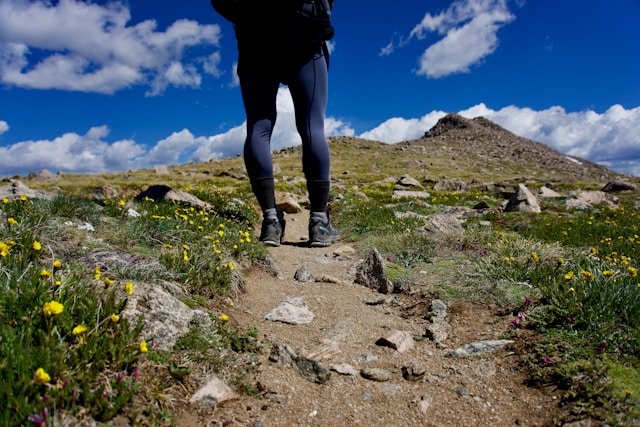
Image of arriving at a trail that plunges into a canyon on a sweltering day. You immediately run the risk of heat stroke or dehydration on the strenuous climb back to your car if you carelessly down the majority of your water bottle on the way down. You wouldn’t have required the search and rescue volunteers to save you if you had made plans in advance.
Forrest advises, “Know the weather, the type of trail, whether it’s really rocky or brushy, shaded versus sunny, and whether or not there are trail markings.” “There are times when a trail appears on a map even though it has been fully overgrown.”
Apps like onX, Trailforks, and Strava are excellent resources for determining route lengths and elevation profiles. Since they can all be used offline, they are all well worth the money.
“Trails have an element of surprise around every corner, which is one of the reasons we love them, but it’s important to know what your limitations are when it comes to some of those surprises,” says Forrest. “Someone else has to come out and risk their safety to get you out of there if you get beyond what you can handle. Also, having more preparation makes it much more enjoyable.
The Advantages of Running on Trails
mountains with trail running
If you let it, trail running can lead you to some very amazing places. Adobe Stock / lzf
Trail running offers distinct advantages to road running, aside from the runner’s high, enhanced cardiovascular health, and sense of camaraderie that all forms of running seem to foster. The fact that you’re on a trail rather on a sidewalk is arguably the biggest advantage, as well as the easiest. There aren’t many other people, stoplights, or construction to deal with for trail runners. They do need to be a little more mindful of the weather, wildlife, and personal safety. However, one of the many things trail runners come to appreciate is that feeling of independence and readiness. Similar to hunting and trekking, trail running frequently turns into a competition to see how much you can carry and how far you can go.”
Compared to a hike, it’s also a quicker method to spend time in the woods. Laura Lancaster, a trail runner and staff writer for Outdoor Life gear, notes that parents will really benefit from this.
“I don’t always have a lot of time to myself to get after it because I have a kid,” she explains. “Trail running allows me to cover more ground in the woods in an hour and get a great workout in compared to a day hike.” For me, that’s a victory.
Gaining strength in your ankle, leg, foot, and core stability muscles is another advantage of trail running. A treadmill or a sidewalk wouldn’t require as much use of these muscles. Even though trail running increases your risk of tripping and falling, particularly in more challenging terrain, you can actually avoid some common running injuries by avoiding repeated hard-surface strikes. This is because trail running’s variable gait on softer terrain contributes to this.
Is There Any Benefit to Trail Running for Hunters?
Engaging in any cardiovascular activity will improve your hunting skills. This holds true whether you spend your mornings perched in a treestand or scaling talus fields in pursuit of goats. Being physically fit won’t ever make you a less effective hunter. However, some forms of hunting profit more from it than others. A strong trail running technique is extremely beneficial for mountain, backwoods, and bird hunters.
“My dog was trailing a bird when I got tired, so I missed shots of flushing roosters.” Additionally, I’ve witnessed other hunters lose out on big game in the West because they could not reach their destination in time, adds Natalie Krebs, executive editor of OL. “I enjoy hunting better when I run trails more often. I get free year-round training for my bird dog and myself.
The following are the advantages of trail running, summarized:
- Spending time outside
- enhanced heart health
- more robust stability muscles in your core and lower body
- Less time spent exercising than just trekking
- A quicker route to arrive at and take in breathtaking sights
- requiring you to focus and forget about anything else for the entire run, making it more mentally difficult than road running
- An excellent activity for dogs that hunt
- Speed scouting for camping and hunting locations, among other things
FAQ about Trail Running
- What distinguishes running shoes from trail running footwear?
- Does trail running cause knee pain?
- Does trail running work the entire body?
Concluding Remarks on Trail Running
It makes perfect sense for hunters, hikers, backpackers, and other outdoor enthusiasts to start trail running. The greatest alternative for getting in better shape or for increasing your comfort and confidence in the woods is trail running. Go elevate your heart rate in the woods instead of the packed gym and the busy pavement.
According to Forrest, “trail boost you the confidence to tackle most things in the outdoors.” “The farther you go, the more you realize you can go indefinitely if you slow down and keep eating.” You find that you can run down switchbacks you’ve never gone down before, or climb hills you couldn’t previously climb. You find yourself drawn into circumstances that are full of small successes. Yes, trail running is open to anyone.